

I asked a Tour Guide from BTrip Bucharest what are some of the buildings that tourists don’t get the chance to visit. And guess what?! The guide was very nice to answer after telling him I won’t suck his blood.
Find the google maps points on this map: Google Maps
Here is the list of interesting places that tourists don’t usually get to see:
Dealul Mitropoliei
The church on the hill holds the relics of Dimitrie Basarabov, the patron saint of the city. The story behind how these relics came to be there is intertwined with the rich history of this hill (the story of how the relics got here). In the past, it served as a gathering place for noblemen to make important decisions, and eventually became the site of the first government seat. Furthermore, it was once home to the royal vineyards and offers a picturesque view, thanks to its location on one of the few hills in Bucharest.
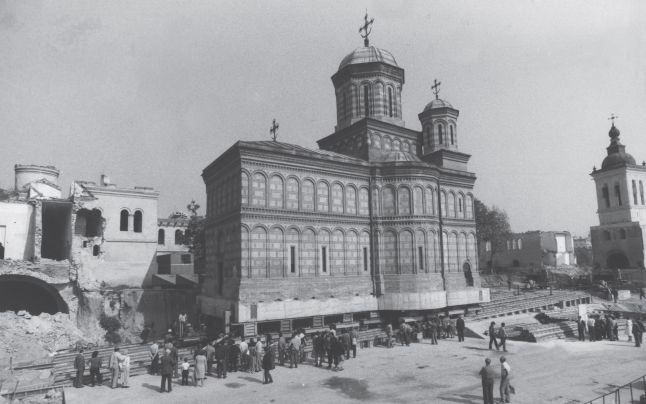
“Mihai Voda” Church
The communists relocated one of the churches via rail to its present location, making way for the construction of the House of the People. Despite undergoing numerous alterations and witnessing the demolition of much of its complex, this particular church remains one of the oldest structures in Bucharest, dating back to 1594. Its original placement was atop an archaeological site from the Dacian era, dating back to 1 BC.
More information here: Link
Holocaust Memorial
A brutalist concrete building that is a memorial but functions more as an art installation. Romania had its own contribution to the Holocaust by persecuting Jewish individuals and ethnically Rroma people. The symbolism and rust are there to showcase the human suffering without being explicit.
Summer Theater
The theater, which has experienced a renaissance following recent renovations, forms a dynamic cinema and theater complex alongside the Capitol Cinema. Dating back to its establishment in 1912, this venue has passed through the hands of various owners over an extended period. Notably, the entrance exudes a captivating charm and holds a special place in people’s memories due to the striking graffiti mural adorning its front gate.
More information here: Link
Sala Palatului
Originally known as the “House of the Republic,” Sala Palatului was constructed during the communist era and served as a symbol of power. It is one of the most renowned landmarks in Bucharest and holds the distinction of being one of the largest event halls in Romania. With a seating capacity of over 4,000, it has hosted numerous high-profile events, including concerts, conferences, exhibitions, and theatrical performances.


 Dracula's Guide to Romania
Leave a reply to Weekly Dracula – Nr. 8 – Dracula's Guide to Romania Cancel reply